
The complete guide
Etched Stemless Wine Glasses, A Practical Buyer's Guide
The problem with most wine glasses
Most people own wine glasses they are slightly afraid of. They live on a high shelf, they come out twice a year, and one of them has already snapped at the stem during washing up. The rest of the time everyone drinks wine out of whatever tumbler is nearest.
That gap between the glasses you own and the glasses you actually use is the thing this set is trying to close. A stemless glass is sturdy enough to use on a Tuesday, pretty enough to put in front of guests on a Saturday, and short enough to live in a normal cupboard rather than a display cabinet.
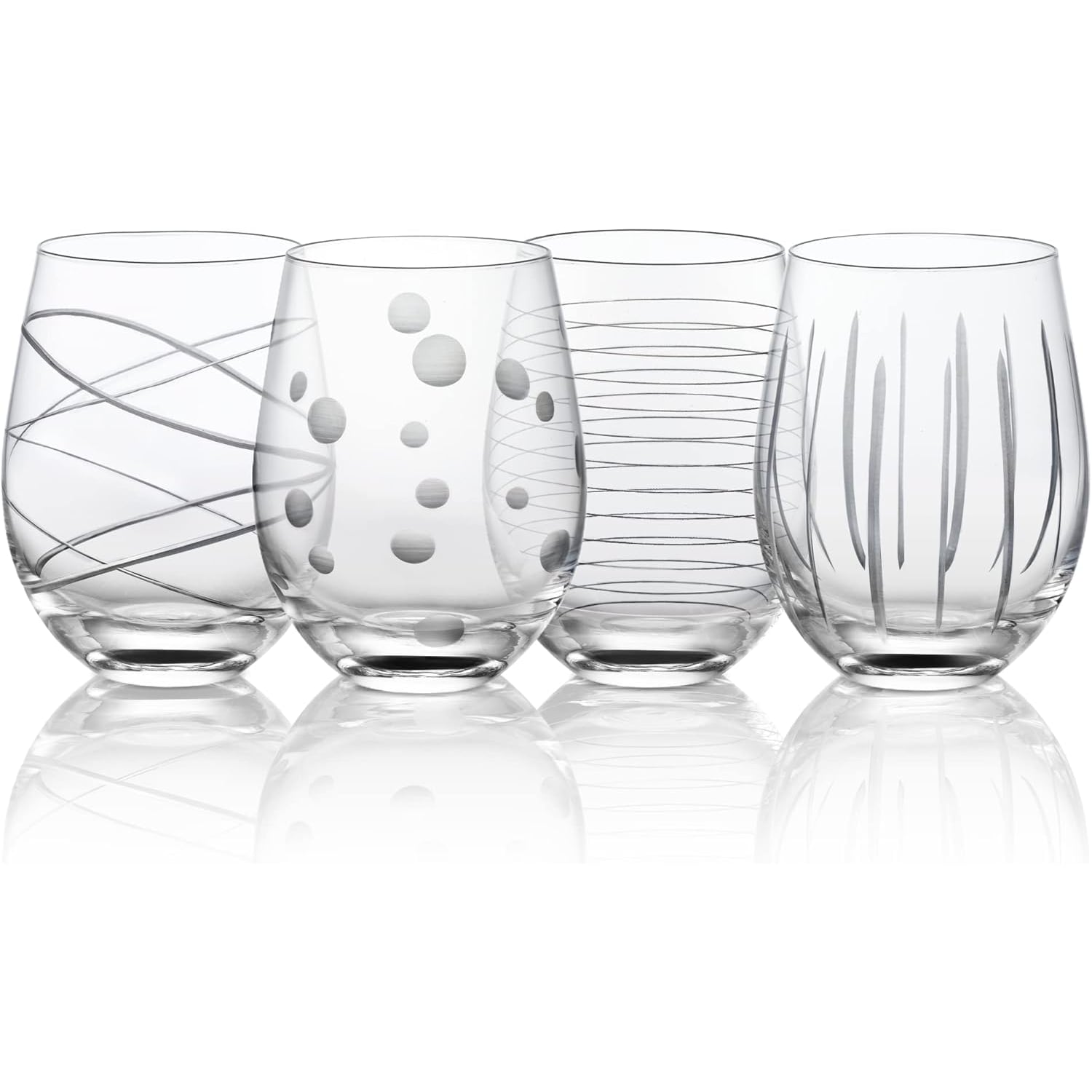
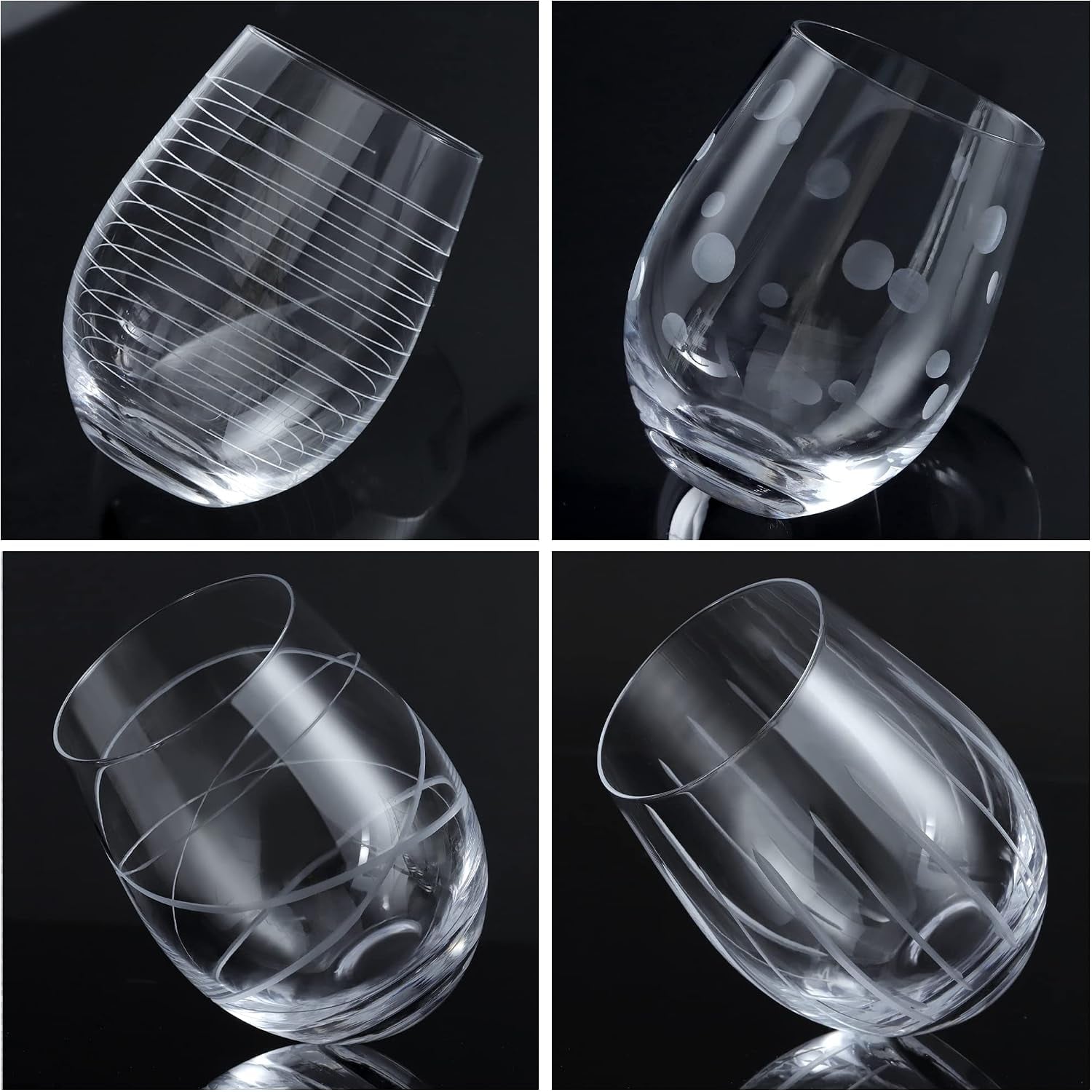
Then there is the other everyday irritation. You pour four drinks, people wander off to different corners of the room, and within quarter of an hour nobody can identify their own glass. You end up pouring fresh drinks and tipping the orphans down the sink. Four different etched patterns fix that without anyone needing to write names on sticky labels.
What etching actually is
Etching works into the surface of the glass rather than sitting on top of it as print or paint would. The listing says an etching process is used to engrave the four patterns and that they are etched by hand.
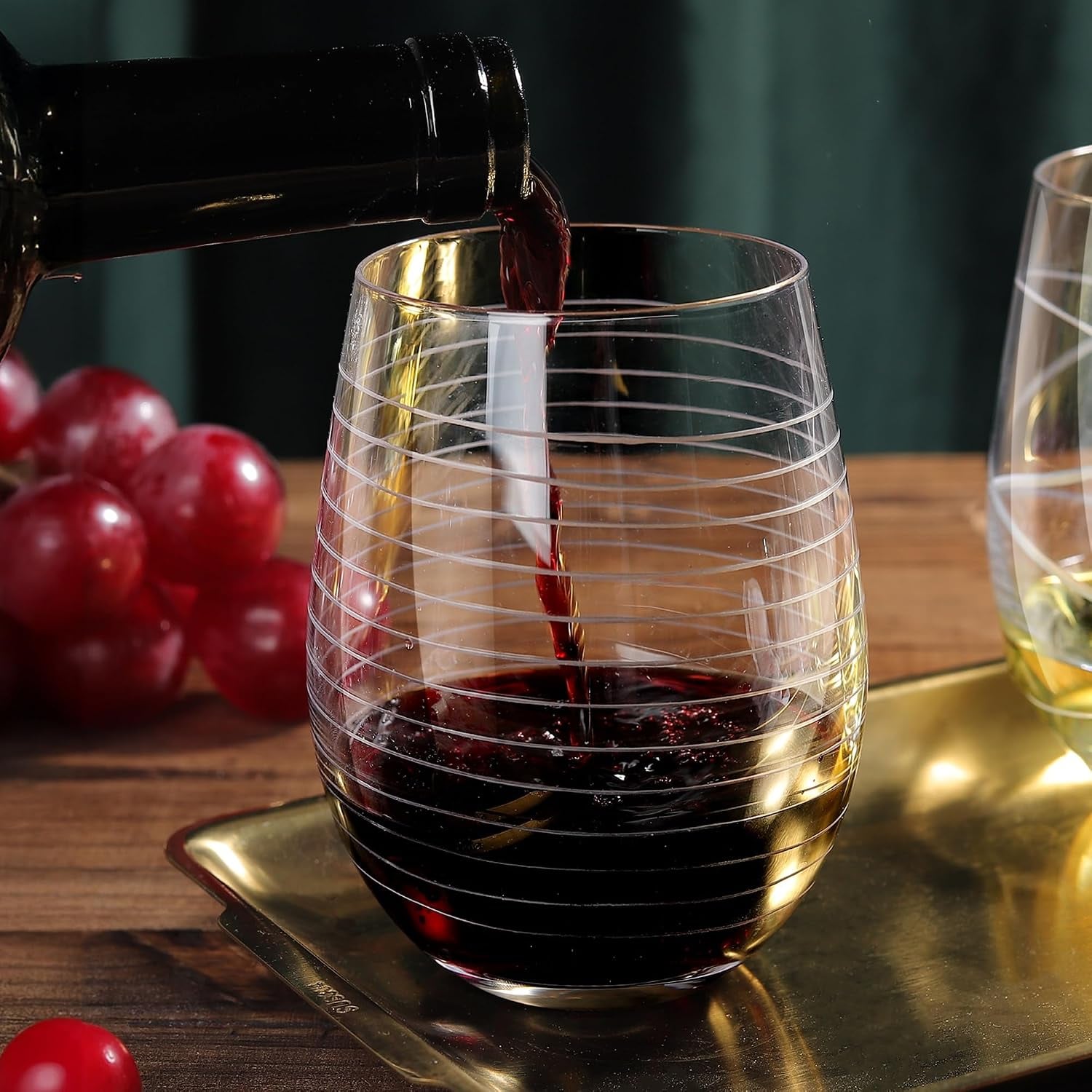
The visual effect is subtle. Etched areas scatter light instead of passing it straight through, so the pattern reads as a soft frosted contrast against clear glass. Put a candle on the table and the glasses pick it up. Fill them with something with colour, like a red or a cranberry juice, and the pattern stands out more strongly against the liquid.
This set uses four separate designs. One glass has swirls, one has dots, one has horizontal lines and one has vertical cuts. There is no lettering of any kind, which some buyers specifically want. Glasses with slogans or names date quickly and limit who you can pass them on to. Pattern-only etching does neither.
Why 520ml matters more than you think
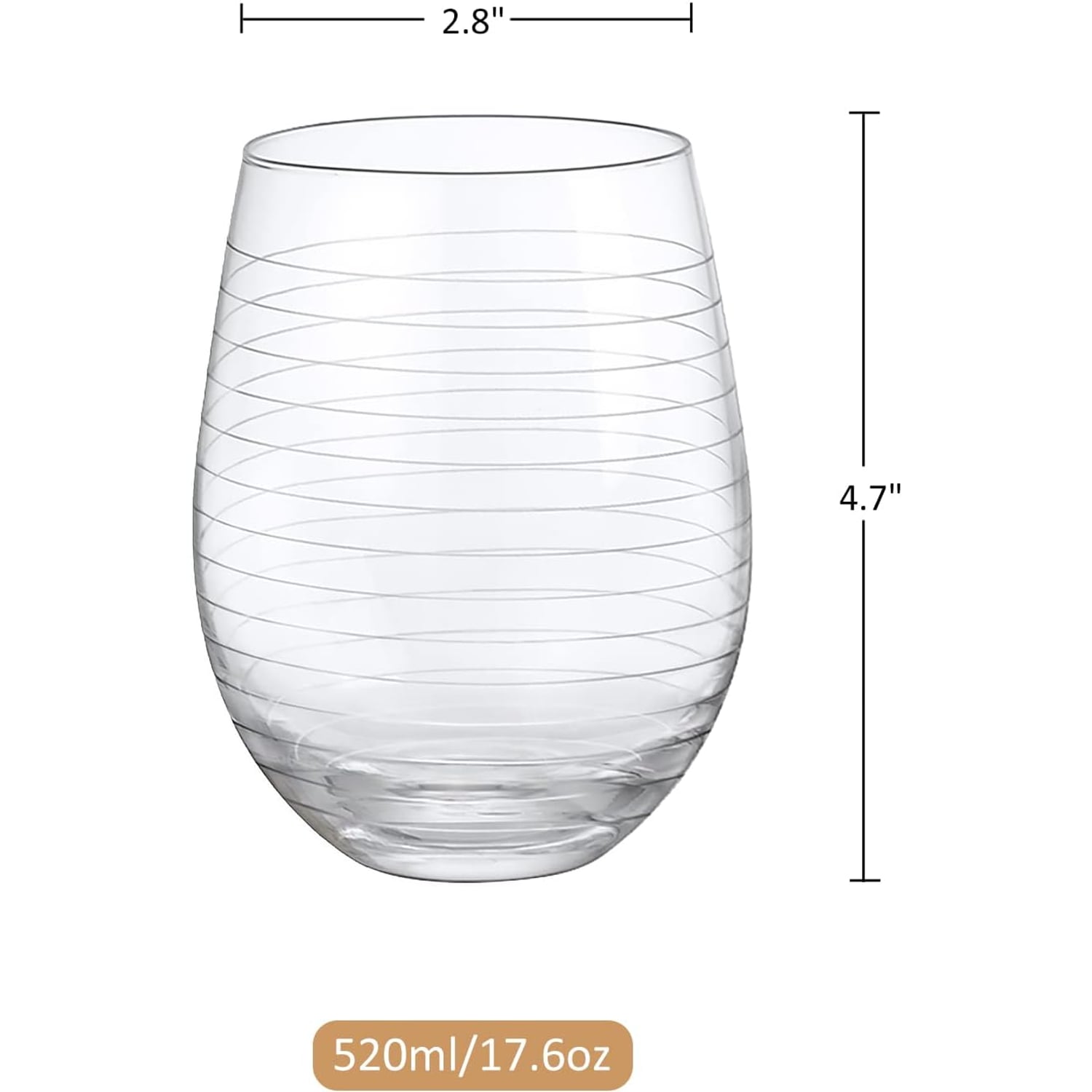
The capacity listed here is 520ml. If you are used to thinking of a wine glass in terms of a standard pour, that number sounds enormous. It is not meant to be filled.
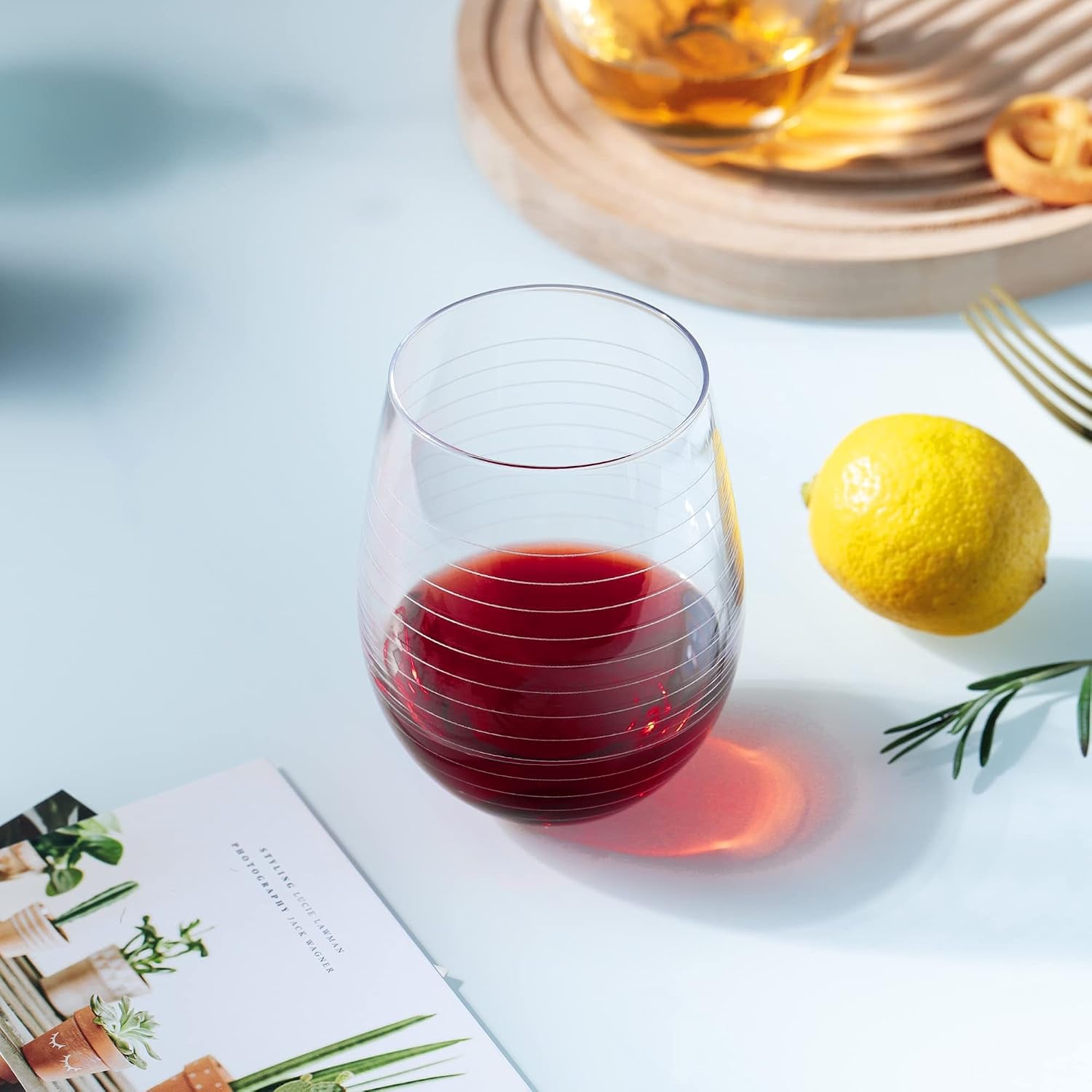
A proper serve of wine is somewhere around 150ml, which in a 520ml glass fills roughly the bottom third. That is exactly right. The empty space above the wine is where aroma collects, and aroma is most of what you taste. A glass filled to the brim gives you nowhere for that to happen, which is why cheap small glasses make good wine taste flat.
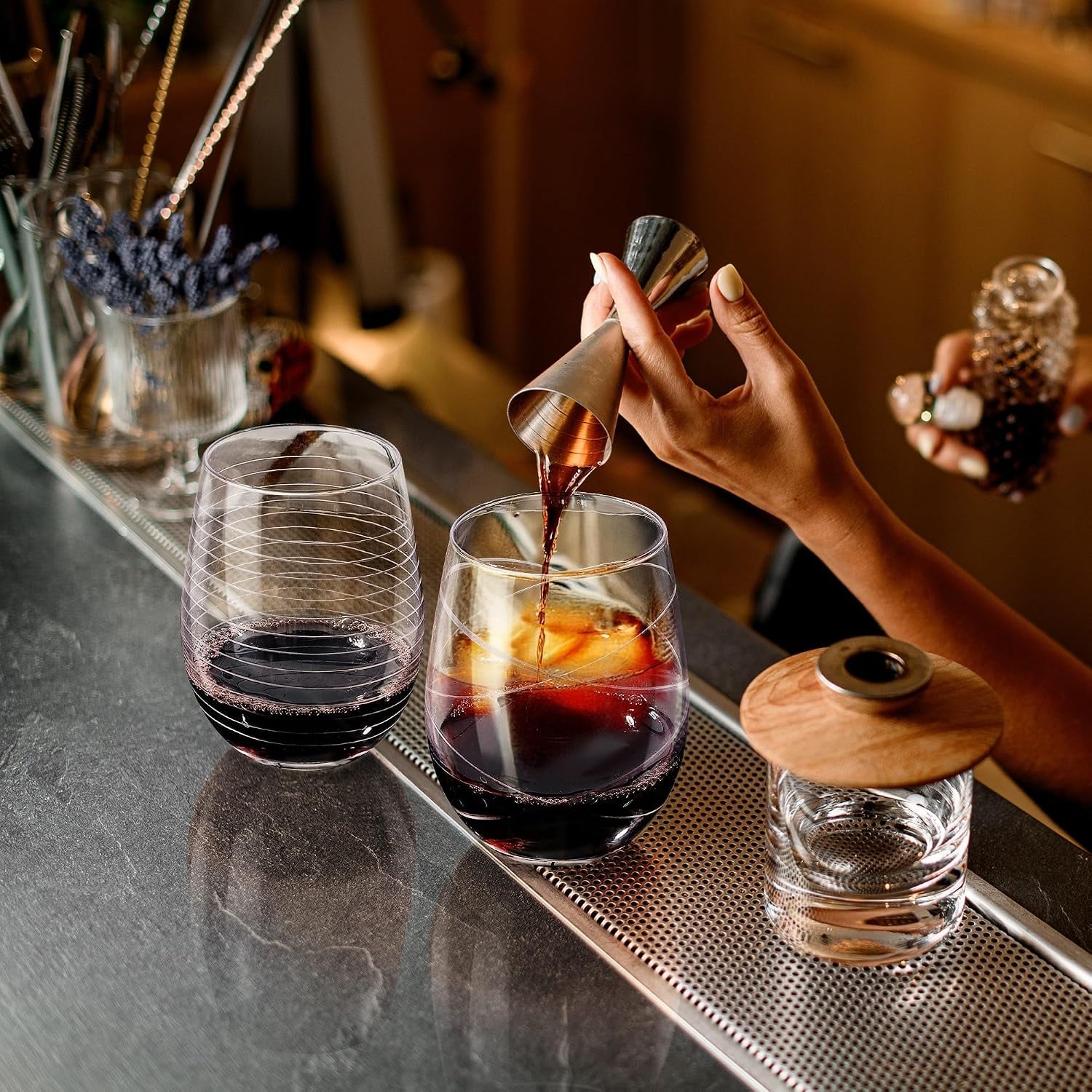
The extra volume has a second payoff. Ice. A gin and tonic needs real room for ice, a decent measure of gin, tonic and a slice of something. A 520ml glass handles that comfortably. So does a spritz, an iced coffee, a long soft drink on a hot afternoon. If you are weighing up the best 520ml wine glasses against something smaller, think about how often the glass will be doing double duty as a tumbler.
Who this set suits
It suits people who entertain in a relaxed way. Friends round the kitchen table, a few people out in the garden, a Sunday lunch that runs long. Stemless glasses are forgiving in exactly those settings because they do not topple when someone reaches across for the bread.
It suits smaller homes. Stemmed glasses need height and they need to be stored carefully. At 11.9cm tall these fit under almost any shelf, and the 7.1cm width means four of them take up a modest footprint.
It suits gift buyers who do not know the recipient's taste in detail. Clear glass with geometric etching is close to universally acceptable. It will not clash with a minimalist kitchen or look out of place in a traditional one. That is why sets like this end up on wedding lists, and why shoppers hunting the best wedding wine glasses often land on something simple rather than something ornate.
It is less suited to two groups. If you are a serious taster who wants varietal-specific stemware with a very fine rim, this is not that product. And if you want glasses you can throw in the dishwasher every night without a second thought, the hand wash instruction will annoy you.
How to choose between stemmed and stemless
The honest answer is that most households should own both, in different quantities. Stemmed glasses are better at keeping white wine cold and better at formal occasions. Stemless glasses tend to get used more often.
If you are only buying one set, think about what your evenings actually look like. Do you drink wine sitting on a sofa? Stemless. Do you carry drinks between rooms or outside? Stemless. Do you hold dinner parties with a tablecloth and courses? You will probably want stems eventually.
Weight and balance are worth considering too. A stemless glass sits in your palm rather than between your fingers, so the feel of the glass matters more. A polished rim, as these have, makes a real difference because there is no thick rolled lip between you and the drink.
Number matters as well. Four is the standard entry point and covers a couple plus two guests. If you regularly host six or eight, two sets gives you a full table with two of each pattern, which still reads as a matching collection rather than a mismatched jumble.
Looking after them
Hand washing is the instruction here, and it takes less effort than people assume. Warm water, a small amount of washing-up liquid, a soft sponge or cloth. Work gently over the etched areas. Rinse and dry straight away with a lint-free towel, because air drying is what leaves the cloudy spots that make glassware look tired.
Avoid three things. Scouring pads, which will scratch both the clear and the etched surfaces. Bleach-based cleaners, which can dull glass over time. And thermal shock, which means never pouring boiling liquid into a cold glass or plunging a hot glass into cold water. Glass does not like sudden temperature swings.
Store them upright with a bit of breathing room. Rims are the thinnest part of any glass, and most breakages happen in the cupboard rather than at the table. If you stack them nose to tail or cram them together, you will eventually hear the crack.
One more small habit. If you have hard water, a rinse with a little white vinegar in the water every few months will keep limescale from building a film across the pattern.
Gifting without overthinking it
Glassware is one of the few gifts that works for people you know well and people you barely know. Everyone drinks something. A set of four means it is a gift for a household rather than an individual, which makes it right for housewarmings, weddings and anniversaries.
Because there is no wording, the set never feels like it was bought for a specific occasion and then stranded. Someone who receives these for a birthday can keep using them without any reminder of the occasion. That is a quiet advantage over glassware with wording on it.
If you are buying for a gift, a presentation box is not listed, so plan to add your own wrap or gift bag if you want it to look finished.
The short version
Four clear stemless glasses, each with its own etched pattern, holding 520ml apiece. Listed as lead free, BPA free and cadmium free, with cut and polished rims. Short enough to store easily, stable enough to use anywhere, and good-looking enough to put in front of guests.
Hand wash them, keep them out of the microwave, and dry them properly. Do that and the set is ready for a serious red or a very unserious gin and tonic.